What Small Business Tax Preparation Really Means (It’s More Than Just Uploading Documents)
For many small business owners, tax season can feel overwhelming. The common misconception is that tax preparation is simply a matter of uploading receipts and financial documents to an accountant. In reality, tax preparation for small businesses is much more than that. It is a strategic process that ensures clarity, compliance, and can even uncover opportunities for financial growth. Understanding the full scope of business tax preparation is essential for every entrepreneur who wants to keep their business healthy, organized, and legally compliant.
Whether you run a boutique retail store, a tech startup, or a service-based business in Denver, proper tax preparation starts with organized financial records, accurate bookkeeping, and a clear understanding of the rules that apply to businesses. Unlike personal tax filing, which primarily focuses on income reporting and deductions, business taxes involve payroll, inventory, expenses, and other regulatory requirements that can complicate the process if not managed properly.
For small business owners in Denver looking for guidance, professional help in small business tax preparation in Denver can offer clarity and peace of mind while reducing the risk of errors and compliance issues.
What Tax Preparation Actually Means for Small Businesses
Many entrepreneurs think of tax preparation as simply sending over invoices, receipts, and bank statements at the end of the year. In reality, tax preparation for small businesses involves a detailed review of your financial records, careful categorization of expenses, and strategic planning to optimize tax outcomes.
Some of the key tasks included in business tax preparation are:

Reviewing financial records for accuracy: This step ensures that income and expenses are correctly recorded and categorized. Misclassified transactions can result in missed deductions or errors that trigger notices from tax authorities.
Identifying deductions and credits: Small businesses often qualify for a wide range of tax deductions, from office expenses and software subscriptions to health benefits and retirement contributions. A proper review can maximize tax savings.
Preparing for audits and compliance checks: Clean and organized books reduce the risk of errors that could lead to audits. Even if you are selected for a review, well-prepared documentation makes the process smoother.
By treating tax preparation as an ongoing process rather than a last-minute task, small business owners can avoid the stress and uncertainty that often accompanies tax season.
Personal vs Business Tax Preparation
One of the most common areas of confusion for entrepreneurs is the difference between personal and business tax preparation. While there are similarities, the differences are significant and can have major implications if misunderstood.
Personal Tax Preparation:
Focuses on individual income, standard deductions, and personal credits.
Usually straightforward, with fewer regulatory requirements.
Primarily concerned with annual reporting.
Business Tax Preparation:
Includes payroll taxes, expenses, inventory tracking, and depreciation of business assets.
Requires organized bookkeeping throughout the year.
Often involves planning for quarterly estimated taxes.
Compliance requirements vary depending on business structure (LLC, S corporation, sole proprietorship, etc.).
For entrepreneurs, confusing personal and business finances is one of the biggest mistakes. Using separate accounts and maintaining accurate books ensures that deductions are properly applied and reduces the risk of IRS notices.
Common Mistakes Business Owners Make in March
March is often a critical month for small businesses. Many entrepreneurs are preparing for annual filings and reviewing their financials from the previous year. However, several common mistakes can create challenges:

Missing deadlines for estimated taxes: Businesses with employees or high quarterly income may need to make estimated tax payments. Missing these deadlines can result in penalties.

Mixing personal and business finances: Using the same account for both personal and business expenses can create confusion and errors.

Incomplete or messy financial records: Without proper bookkeeping, deductions can be overlooked, and errors may appear on tax returns.

Overlooking deductible expenses: Small details, such as office supplies, business travel, or software subscriptions, are often forgotten.

Not seeking professional guidance: Some business owners try to manage taxes on their own and inadvertently miss critical compliance requirements.
Avoiding these mistakes requires proactive financial management and professional oversight. Partnering with experienced tax services for businesses can help reduce errors and ensure compliance throughout the year.
Why Clean Books Are Crucial
One of the most important steps in tax preparation is maintaining clean, organized books. Proper bookkeeping provides several benefits:
Fewer IRS notices: Accurate and organized records reduce the likelihood of errors that trigger tax notices or audits.
Lower audit risk: Businesses with clear financial documentation are less likely to face scrutiny.
Easier error detection: Discrepancies can be identified and corrected before filing, preventing costly mistakes.
Strategic decision-making: Clear financial data allows owners to make informed business decisions, including planning for expansion, hiring, and investment opportunities.
Implementing a consistent accounting system, regularly reviewing financial statements, and reconciling accounts are all part of maintaining clean books. For businesses aiming to stay compliant and avoid unnecessary stress, a professional review of financial records is invaluable.
How Professional Business Tax Preparation Helps
Professional business tax preparation goes beyond filing forms. It is about creating clarity, ensuring compliance, and uncovering financial opportunities for your business.
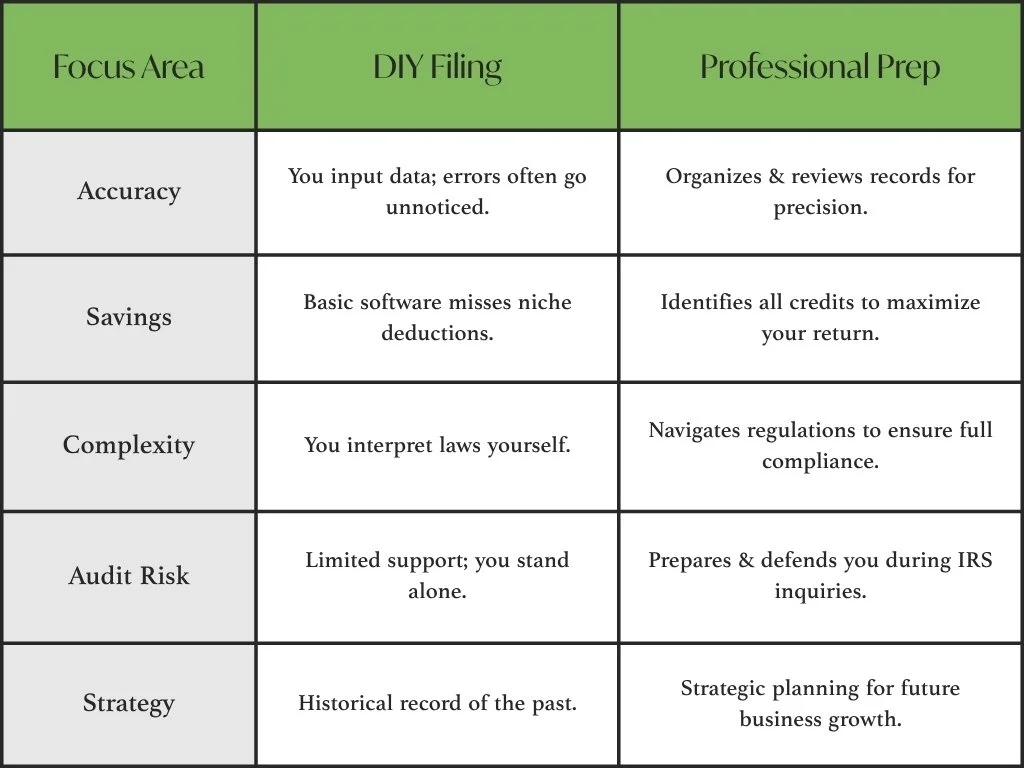
A professional business tax preparation service can help you:
Organize and review your financial records for accuracy
Identify all eligible deductions and tax credits
Navigate complex tax regulations and ensure compliance
Prepare for potential audits or inquiries
Plan for future growth with strategic tax planning
Partnering with a professional allows business owners to focus on running their companies instead of worrying about tax deadlines and complicated regulations.
Expert Opinion: Q&A on Small Business Tax Preparation
Q: What is the single most important factor in successful small business tax preparation?
A: Accuracy and organization of financial records are key. Without clean books, it is nearly impossible to maximize deductions, ensure compliance, or reduce audit risk. A professional review helps catch mistakes early.
Additional Benefits of Professional Tax Services
Provides peace of mind during tax season
Improves financial transparency for investors, lenders, or partners
Helps with long-term planning and strategic growth
Reduces stress and frees up time to focus on operations
Conclusion
Small business tax preparation is about more than just filing forms. It’s about achieving clarity, maintaining compliance, and setting your business up for success. Proper preparation reduces risk, maximizes deductions, and provides insight into your financial health.
Whether you are a startup owner or an established entrepreneur in Denver, taking a proactive approach to tax prep can make a significant difference in your business operations.
➡️ Book a Small Business Tax Prep Call today to gain clarity, stay compliant, and minimize risks for your business.
If you found this guide helpful, share it with fellow business owners so they can also benefit from expert tips on small business tax preparation. Sharing valuable resources strengthens the local business community
Frequently Asked Questions (FAQ)
-
While not legally required, a professional can help maximize deductions, ensure compliance, and reduce stress. It is especially helpful for businesses with employees, multiple revenue streams, or complex deductions.
-
A tax accountant typically offers broader financial and accounting services, while a tax preparer focuses specifically on filing tax returns and ensuring compliance. Both can help small businesses, but accountants often provide ongoing financial strategy support.
-
Keep separate business accounts, maintain clean bookkeeping, track all expenses, and consider quarterly reviews with a professional. Avoiding last-minute filings significantly reduces errors.
-
Yes, but for small businesses, professional guidance ensures compliance, maximizes deductions, and reduces the likelihood of IRS notices.